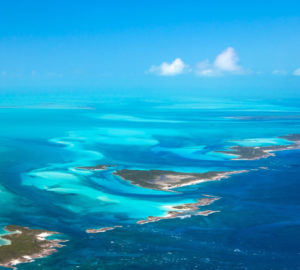
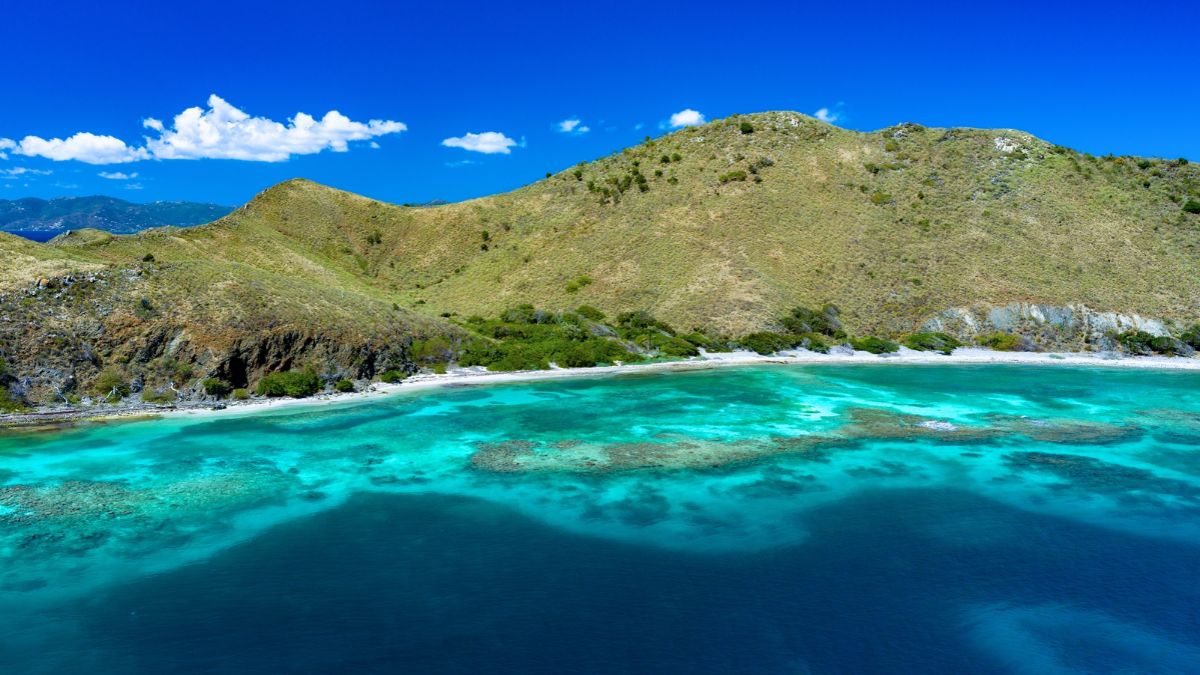

The British Virgin Islands (BVI) are one of the most celebrated sailing grounds on earth: more than 50 islands and cays, steady trade winds, warm water all year and an anchorage that is rarely more than a couple of hours from the last one. Whether you are planning your first yacht charter in the Virgin Islands or comparing destinations for the season ahead, this guide covers where the BVI are, the weather and best time to go, why sailing is the best way to see them, and the places you should not miss.
Where Are the British Virgin Islands? BVI at a Glance
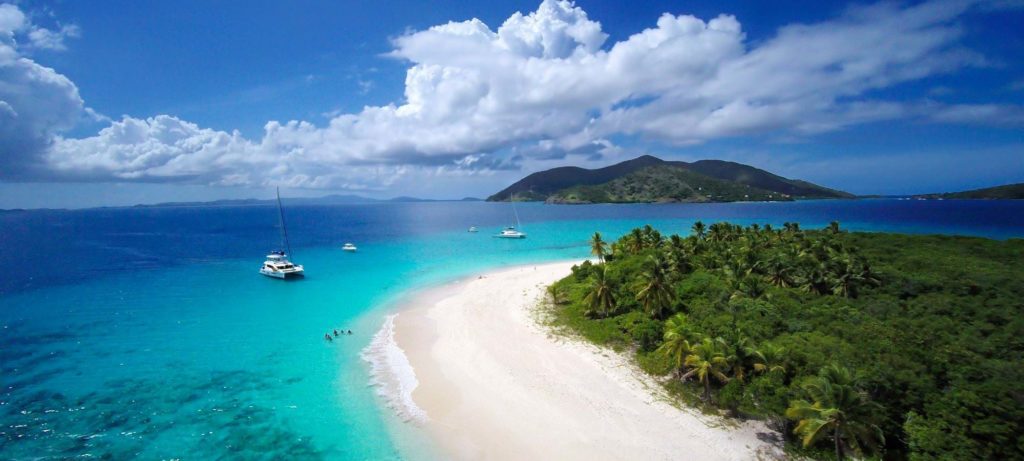
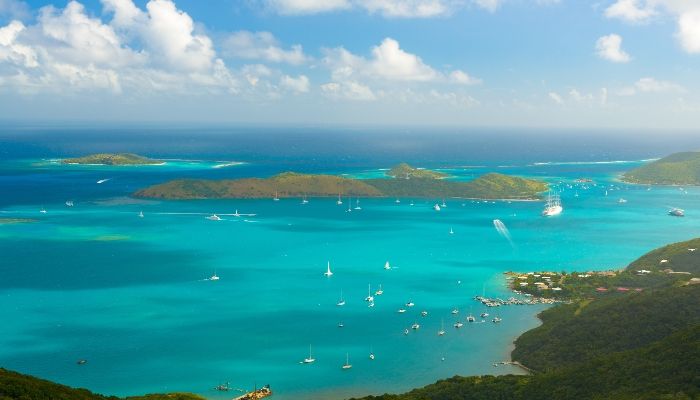
The British Virgin Islands sit in the northeastern Caribbean, in the Lesser Antilles at about 18 degrees north, just east of Puerto Rico and right next to the US Virgin Islands. The main islands are Tortola (home to the capital, Road Town), Virgin Gorda, Jost Van Dyke and Anegada, surrounded by dozens of smaller islands and cays. Most of the cruising takes place in the sheltered waters of the Sir Francis Drake Channel, which is why the BVI are often called the sailing capital of the Caribbean.
Not sure whether the British or the American side suits you better? Read our comparison: BVI vs USVI: which Virgin Island should you choose?
| Fact | Detail |
|---|---|
| Location | Northeast Caribbean, Lesser Antilles (about 18°N), east of Puerto Rico |
| Capital | Road Town, Tortola |
| Main islands | Tortola, Virgin Gorda, Jost Van Dyke, Anegada |
| Islands and cays | 50+ |
| Language | English |
| Currency | US dollar |
| Time zone | Atlantic Standard Time (UTC−4), no daylight saving time |
BVI Weather and Temperatures
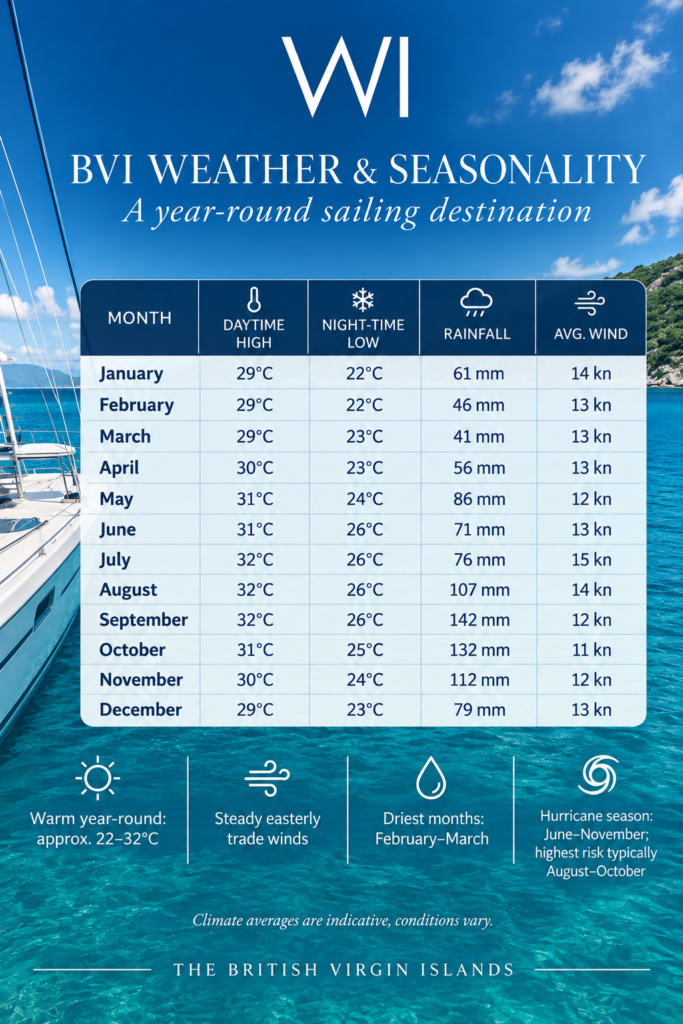
The BVI have a tropical climate tempered by the northeast trade winds. Temperatures stay between roughly 25°C and 31°C (77–88°F) all year, with an annual average around 27°C (81°F). Daytime highs sit near 29°C (84°F) in January and peak around 33°C (91°F) in September and October. Rain usually falls in short, heavy bursts rather than all day, and the breeze keeps the heat comfortable on the water. That steady wind is exactly what makes the islands so good for sailing.
Best Time to Visit the BVI: Seasons Explained
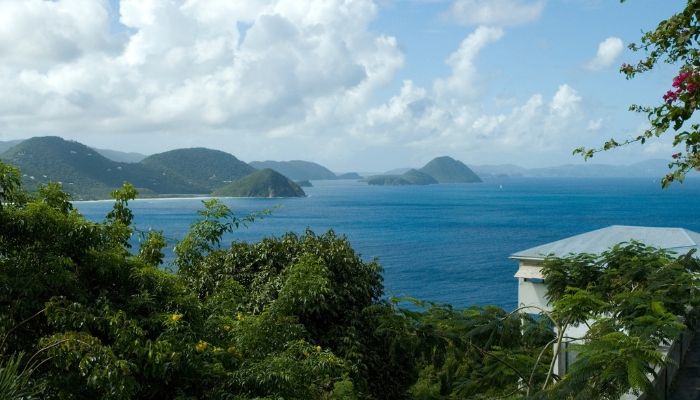
The best time to visit the British Virgin Islands is from December to April, when the weather is at its driest and the trade winds are most reliable. That said, the BVI are a true year-round destination, and each season has its own appeal.
| Season | Months | What to expect |
|---|---|---|
| High season | Mid-December to April | Driest weather and steady trade winds. Christmas and New Year are the busiest weeks, and February and March offer the lowest chance of daytime rain. The BVI Spring Regatta usually takes place in late March or early April. |
| Shoulder season | May, June and November | Warmer and quieter, with fewer boats in the popular anchorages. May and June are a favorite with sailors who want good conditions without the crowds. |
| Low season | July to October | Hottest and most humid months, with September and October the wettest. This is also the peak of the Atlantic hurricane season, so flexibility and good travel insurance matter. |
Our tip: if you want dry weather and quieter beaches, aim for January or February, after the holidays and before spring break. For Christmas and New Year, book your yacht as early as possible: those are the most in-demand weeks of the year.
A quick note on hurricanes: the Atlantic hurricane season officially runs from 1 June to 30 November. Most charter activity concentrates between December and June for this reason, and a good charter broker will help you plan around the weather.
Why Sail the British Virgin Islands?
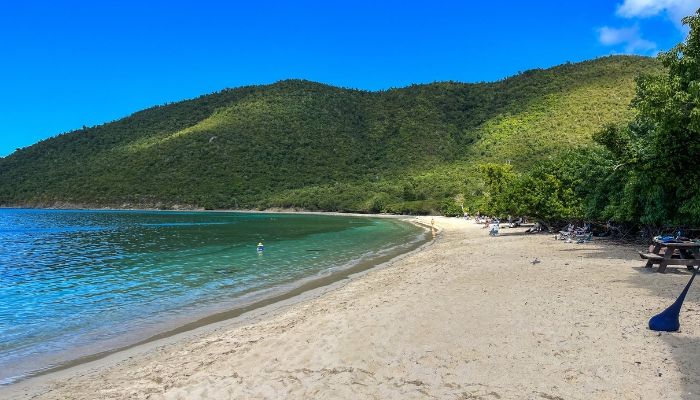
The BVI are the easiest place in the Caribbean to build a great sailing holiday, and there are good reasons they keep topping charter wish lists.
- Short, scenic hops. A classic seven-day loop covers only about 70 to 90 nautical miles in total, so you spend more time swimming, snorkeling and relaxing than sailing.
- Sheltered cruising waters. Most legs run along the protected Sir Francis Drake Channel, with islands in sight and plenty of mooring options, which makes the BVI ideal for first-time charterers.
- Reliable trade winds. The northeast trades blow steadily through the main season, giving you lively sailing and natural air-conditioning at anchor.
- Variety on every leg. One day you are at a lively beach bar, the next you have a deserted cove to yourself. Few destinations pack so much contrast into so little distance.
- World-class snorkeling and diving. Coral reefs, sea caves and the famous RMS Rhone wreck are all within easy reach of your anchorage.
- Simple logistics. English is spoken everywhere, the US dollar is the currency, and most guests arrive via connecting flights to Tortola.
- Perfect for catamarans. Stable, spacious and shallow-draft, a catamaran charter in the BVI gives families and groups of friends plenty of room, easy access to the beaches and a comfortable ride.
And because a yacht is your hotel, restaurant and transport in one, you wake up somewhere new every morning without ever repacking a bag.
The Best Things to See and Do in the BVI
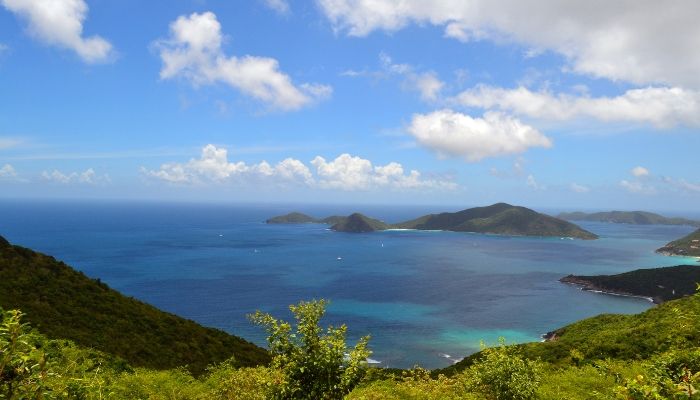
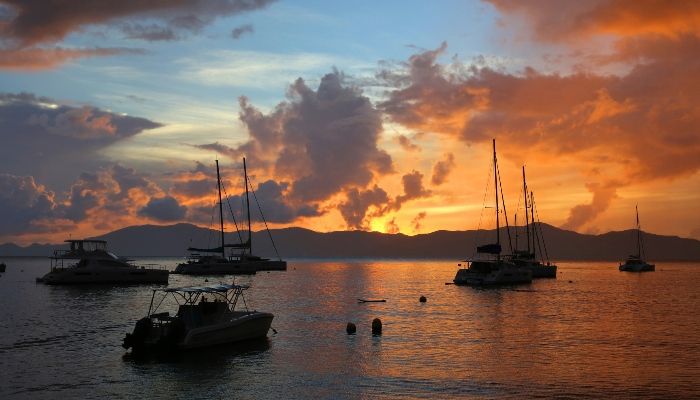
These are the stops that nearly every BVI sailing itinerary is built around. Together they give you a perfect mix of nature, beach life and adventure.
The Baths, Virgin Gorda
The Baths are the most famous natural wonder of the British Virgin Islands: giant granite boulders piled along the shore, forming sea-filled grottoes, shaded pools and narrow passages you can swim and scramble through. Arrive early in the day to enjoy them before the tour groups, and bring water shoes and a snorkel mask.
Jost Van Dyke: White Bay and Great Harbour
Small in size and huge in personality, Jost Van Dyke is the island of beach bars. Drop anchor off White Bay, wade ashore to the Soggy Dollar Bar, the birthplace of the Painkiller cocktail, then head to Great Harbour for dinner and live music at Foxy’s. Nearby, Sandy Spit is a postcard-perfect islet made for an afternoon swim.
Norman Island and The Indians
Legend says Norman Island inspired Robert Louis Stevenson’s Treasure Island, and its caves are a classic snorkeling stop for a reason. The sheltered anchorage at The Bight is an easy first night out of Tortola, and the rock pinnacles known as The Indians, close by, offer some of the best snorkeling in the BVI.
Anegada: Lobster, Flamingos and Empty Beaches
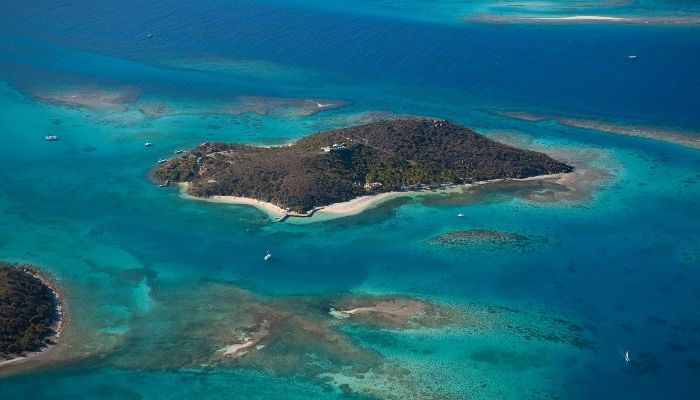
Unlike the other hilly volcanic islands, Anegada is a low coral island lying to the north, ringed by reef and long, empty beaches such as Loblolly Bay and Cow Wreck Beach. Come for fresh grilled lobster served at a beachside table, stay for the flamingo ponds and the feeling of being far from everything. It is a longer passage from Virgin Gorda, so it is best enjoyed with an experienced captain.
Salt Island and the Wreck of the RMS Rhone
The wreck of the RMS Rhone, a Royal Mail steamer lost in a hurricane in 1867, lies off Salt Island inside the Rhone Marine Park. It is widely regarded as one of the finest wreck dives in the Caribbean, and parts of it are shallow enough to snorkel.
Cooper Island and Peter Island
Cooper Island is a laid-back stop with a beach club and a calm mooring field, while Peter Island offers several beautiful white-sand beaches, including Deadman’s Bay. Both are ideal for a slow day of swimming, paddleboarding and sundowners on deck.
North Sound, Virgin Gorda
The North Sound is a large, protected bay with marinas, beach bars and plenty of water sports. It is a great base for kayaking, kitesurfing and paddleboarding, and a natural stop between The Baths and Anegada.
Read also: BEST 8 AND 10 DAYS BRITISH VIRGIN ISLANDS CHARTER ITINERARIES – OUR RECOMMENDATIONS
More to Love: Food, Diving, Events and a 7-Day BVI Sailing Itinerary
What to Eat and Drink
The BVI table is simple and delicious: grilled Anegada lobster, fresh fish, conch and beach barbecues, usually eaten with your toes in the sand. Try a Painkiller or a bushwacker, the two cocktails every beach bar has its own version of, and look out for local rum and live music in the evenings.
Snorkeling, Diving and Water Sports
With warm water, clear visibility and reefs close to almost every anchorage, the BVI are a paradise for snorkelers and divers. A good charter yacht carries snorkeling gear, paddleboards and often a tender for exploring, so you can swim, paddle and explore straight from the back of the boat.
Events Worth Planning Around
Sailing fans should look at the BVI Spring Regatta and Sailing Festival, usually held in late March or early April. In December, Christmas on Main Street brings festive energy to Road Town, which makes the holiday season a fun time to be on the water.
A Classic 7-Day BVI Itinerary
This loop from Tortola covers the highlights at an easy pace, with roughly 70 to 90 nautical miles in total.
- Day 1: Tortola to Norman Island. An easy 7-nautical-mile sail across the Sir Francis Drake Channel. Snorkel the caves and spend the night at The Bight.
- Day 2: Salt Island and Cooper Island. Snorkel the RMS Rhone wreck, then enjoy a relaxed evening at Cooper Island.
- Day 3: Virgin Gorda and The Baths. Explore the boulders and grottoes early, then anchor in the area.
- Day 4: North Sound. Paddleboard, kayak and enjoy the beach bars around the sound.
- Day 5: Anegada. About 15 nautical miles north. Lobster dinner on the beach and flamingos at the salt ponds.
- Day 6: Anegada to Jost Van Dyke. The longest and often best sail of the week, about 20 nautical miles. Stop at Sandy Spit on the way.
- Day 7: Jost Van Dyke to Road Town. Final swim and a Painkiller at White Bay, then about 8 nautical miles back to Tortola.
Prefer a shorter break or less sailing? This itinerary can easily be cut down to a long weekend or a 5-day cruise focused on the western or eastern BVI. Our team will gladly help you design the route that suits your crew.
Planning Your BVI Yacht Charter: Practical Information
Getting There and Entry Requirements
Most visitors reach the BVI by connecting flights to Tortola, or by ferry from the neighboring US Virgin Islands. Many nationalities, including US, UK and Irish citizens, can visit without a visa for up to 30 days (one month), and your passport must be valid for the length of your stay. Since 1 January 2025, all travelers must also complete an online embarkation card, which can be submitted up to 72 hours before arrival. A small environmental and tourism levy (10 US dollars) applies on arrival by air or sea and is usually included in your ticket. Entry rules can change, so always check the official BVI Immigration website or your government’s travel advice before you fly.
Crewed Charter, Bareboat or Motor Yacht?
- Crewed charter: a professional captain, and often a chef and hostess, look after sailing, meals and itinerary. No sailing experience is needed, and it is the most relaxing way to experience the BVI.
- Bareboat charter: you skipper the yacht yourself, which requires proven sailing qualifications and experience.
- Catamaran or monohull: catamarans offer more deck space, more privacy for guests and a steadier ride at anchor, which is why they are the most popular choice for families and groups.
- Motor yacht: the fastest way to cover more ground, with generous interior space and comfort in every weather.
Not sure which option fits your group? Our team can match you with the right yacht. See our yacht charter in the Virgin Islands page or get in touch for a tailor-made proposal.
Thinking of Owning a Yacht in the BVI?
Many yacht owners choose to place their boat in the BVI, either for personal cruising or to generate charter income. Windward Yachts has been a yacht broker for 25 years, helping clients buy a yacht and then manage it in the charter market. If you are weighing your options, our guide to BVI yacht registration: pros and cons explains what to consider before you register.
BVI Yacht Charter FAQ

Where are the British Virgin Islands?
The BVI are in the northeastern Caribbean, in the Lesser Antilles, just east of Puerto Rico and next to the US Virgin Islands. The main islands are Tortola, Virgin Gorda, Jost Van Dyke and Anegada.
What is the best time to go to the BVI?
December to April is the best time for dry weather and steady trade winds. January and February are ideal if you want sunshine with fewer crowds, while May and June are good for quieter anchorages.
How many days do you need to sail the BVI?
Seven days is the sweet spot, as it lets you cover the highlights, including The Baths, Jost Van Dyke and Anegada, at a relaxed pace. A long weekend or a 4 to 5 day cruise is also enough to enjoy the best of the western or eastern BVI.
Do I need a sailing license to charter a yacht in the BVI?
Not on a crewed charter, where a professional captain handles the sailing. A bareboat charter requires proven sailing experience and qualifications.
Do I need a visa for the British Virgin Islands?
Many nationalities, including US, UK and Irish citizens, can enter without a visa for up to 30 days. You will need a valid passport and the online embarkation card. Always confirm the latest rules before traveling.
What currency is used in the BVI?
The US dollar is the official currency.
What is the difference between the BVI and the USVI?
They are two separate territories in the same island chain, with different governments, entry rules and cruising styles. Our guide BVI vs USVI: which Virgin Island should you choose? compares them side by side.
Ready to Sail the British Virgin Islands?
Whether you dream of a week of beach bars and snorkeling or a private escape to Anegada, the BVI deliver. With 25 years of experience as a yacht broker, the Windward Yachts team will help you choose the right catamaran or sailing yacht for your dates, crew and budget. Explore our yacht charter options in the Virgin Islands or contact us to start planning your BVI charter.