
Listing a yacht for charter: a great opportunity to offset the cost of yacht ownership
Owning a yacht is one of the most rewarding investments a person can make and one of the most expensive. Between crew, insurance, dockage, and maintenance, annual running costs typically land somewhere between 10% and 15% of the vessel’s value, and superyachts can push past 20%. For most owners, the yacht sits idle for the majority of the year: the average recreational owner uses their boat only a handful of weeks annually. Chartering it out during the weeks you’re not aboard is one of the few realistic ways to put that idle capital to work.
But here’s the thing owners rarely hear from brokers eager to sign a listing agreement: your first year on the charter market will not look like your third year. It almost never does. Before you get excited about the brochure rate multiplied by “X weeks a year,” let’s walk through what a realistic first year actually looks like revenues, costs, and the number that matters most: your net result.
Why the 1st year of a yacht listed for charter should be analysed separately?
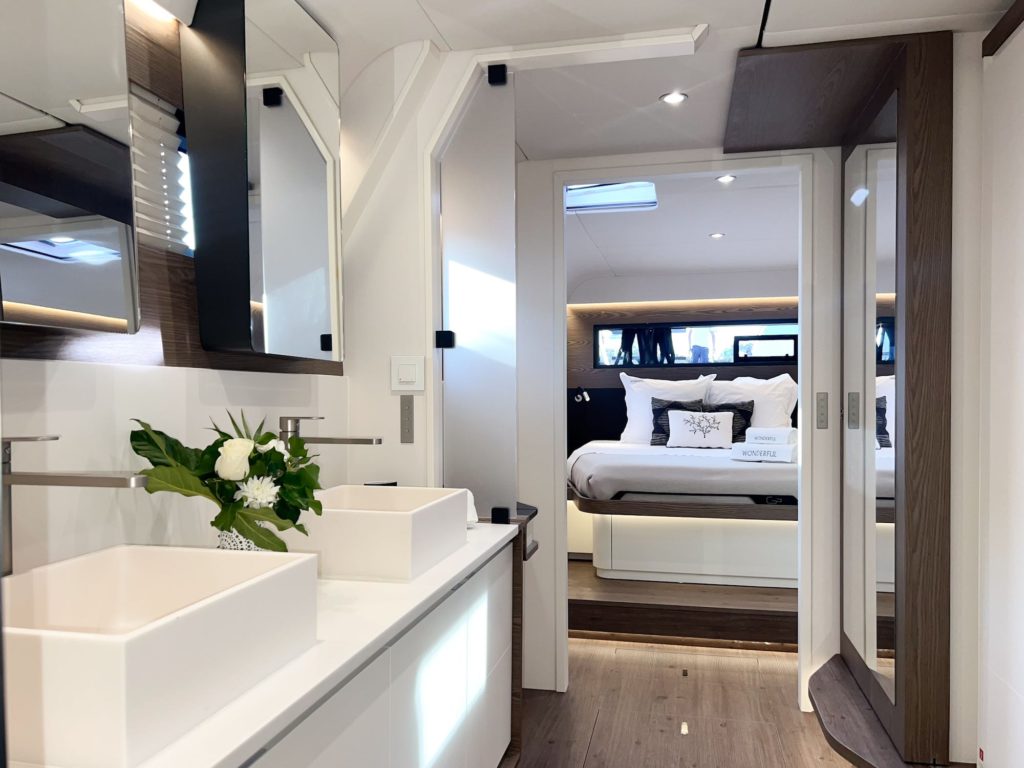
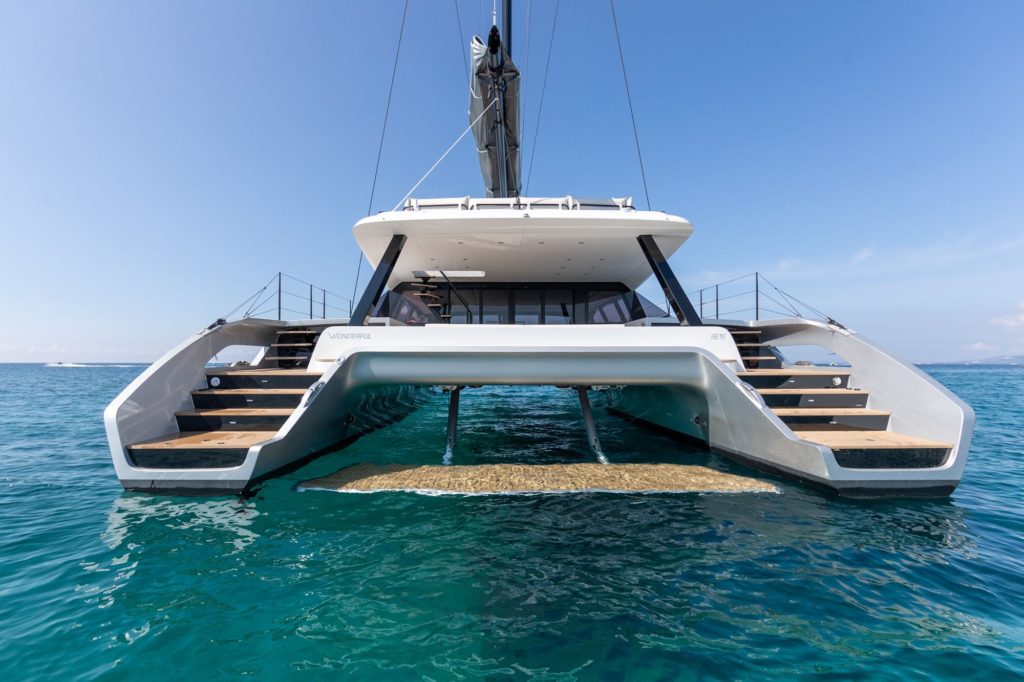
A charter yacht is, in many ways, a new hospitality business and like any new business, year one carries a disproportionate share of one-off costs and a reputation that hasn’t been built yet.
Upgrades and certifications. Many yachts, especially those that were previously used only privately, need to go through a round of upgrades before they’re competitive and compliant on the charter market. This can mean anything from safety equipment and crew certifications (STCW, flag-state commercial coding) to interior refreshes that bring the yacht up to the standard charter guests expect for the rate being asked.
Photography and videography. Charter brokers sell yachts through imagery long before a guest ever sets foot on deck. A professional photo and video package the kind that will actually get your yacht shortlisted by retail brokers typically runs into the tens of thousands of euros, and it’s a cost you carry once, not every season.
Flat listing fees. Some brokers and central agencies (not us) charge the owner a flat annual fee simply to be included in their charter fleet, on top of any commission earned on bookings. It’s worth knowing this exists, and asking about it directly before you sign.
Going it alone. If you decide to market your yacht independently rather than through a broker network, you’ll need your own website, advertising, and a presence in the places charter clients actually look which, in practice, means recreating much of the marketing infrastructure a good broker already has.
None of this repeats in year two the same way. Which is exactly why judging a yacht’s charter potential or your broker’s performance off a single first season is misleading in either direction.
Read also: Best Catamarans to Buy in 2026: Ultimate Luxury & Performance Guide
How often can your yacht be really booked in year one?

This is the number every prospective owner asks first, and the honest answer is: less than the brochure suggests.
The industry average for a brand-new listing is between 4 and 10 weeks per year. A fully established yacht with a strong reputation and repeat clientele can reach 7 to 12 weeks depending on the type of yacht once it’s a known quantity on the market but that’s a third- or fourth-season number, not a first-season one. A new listing simply hasn’t built the track record, guest reviews, or broker familiarity yet that drives bookings.
Region matters enormously. The Mediterranean and the Caribbean remain by far the most popular charter grounds, together capturing the large majority of global charter weeks each year, concentrated heavily in the peak season windows (roughly April–October in the Med, winter months in the Caribbean). A yacht based in a less-trafficked cruising ground will simply see fewer enquiries, regardless of how well it’s marketed.
Not all yacht types are equal. A modern 40–50m motor yacht with contemporary styling, good beach club, and water toys will always out-book an older or more idiosyncratic vessel of the same size. Layout, guest capacity, toy inventory, and even the yacht’s paint color and photography all move the needle on demand. If you’re choosing a yacht partly with charter income in mind, this is where a broker’s early input is genuinely worth having.
The revenues you get as an owner from a yacht you list for charter

The charter rate is your main revenue stream, and it scales steeply with size, type, and age. As a rough 2026 market guide:
- Superyachts over 100ft with premium specification: anywhere from $300,000 to well over $1 million per week at the top end.
- Crewed catamarans, 50 to 65 feet: roughly $20,000 to $45,000 per week in the Caribbean, and generally €8,000 to €25,000 in the Mediterranean depending on age and specification.
- Larger catamarans and small motor yachts, 65 to 100 feet: roughly $45,000 to $120,000 per week.
- Mid range motor yachts, 30 to 45m: roughly $150,000 to $300,000 per week.
Read also: New vs 2nd hand yacht purchase: the key considerations
What are the operating expenses you should expect during your first year?



- Crew salaries and expenses: This is the single largest cost line and it scales dramatically with yacht size. A crewed catamaran typically runs with just 2 to 4 crew (a captain and a chef or hostess, sometimes a deckhand), with combined monthly payroll around $6,000 to $16,000. A 30 to 40m motor yacht usually carries 4 to 6 crew, and a 50m plus vessel with full hospitality service can carry 10 or more, pushing total annual crew costs anywhere from $250,000 to well over $1,200,000. Monthly pay by role ranges widely, from around $2,500 to $4,000 for a junior deckhand or stewardess up to $10,000 to $25,000 or more for an experienced captain on a larger yacht. Crew costs typically represent 30 to 40% of total annual operating expenses across the board, regardless of yacht size.
- Dockage & mooring fees, which vary enormously by region and season a berth in Monaco or Porto Cervo in August costs a multiple of the same length of dock in the off-season or in a less fashionable marina. Catamarans, thanks to their beam, sometimes pay a premium per meter of length in marinas that charge by footprint rather than length alone.
- Maintenance & repairs, an ongoing cost that tends to spike in year one as any deferred issues from previous ownership surface once the yacht is worked harder under charter use.
- Insurance, covering hull, machinery, and third-party liability a cost that rises with charter use since insurers price in the additional guest-liability exposure.
- Brokerage commissions, typically 15 to 25% of the gross charter fee paid to the retail broker who brings the client, sometimes with an additional central agency fee depending on how the yacht is listed.
- Provisions, supplies, and fuel, which are largely though not always entirely covered by the charterer’s APA rather than the owner’s budget.
Altogether, total annual operating costs commonly fall in the range of 10–15% of the yacht’s market value, and can reach 15–20% or more for larger, more crew-intensive superyachts.
Older yachts in each bracket typically sit 30 to 40% below newer equivalents. Catamarans hold their charter appeal a little longer than motor yachts of comparable size, since guests are generally less sensitive to build year than they are on a large motor yacht.
How much can you profit listing a yacht on the charter market during your 1st year?
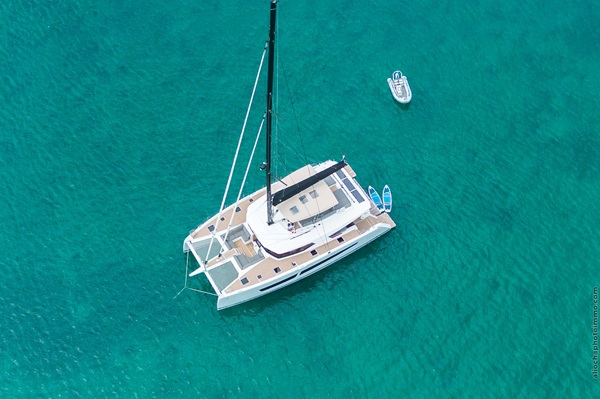
Here’s the number owners actually need: in year one, charter income typically offsets somewhere between 10% and 30% of a yacht’s annual running costs. A genuine net profit where charter revenue exceeds total operating expenses is uncommon in the first season, and owners who go in expecting one are usually disappointed.
To put it in concrete terms: a 45m motor yacht chartering at roughly $180,000/week, booking a realistic 5 weeks in its first season, generates about $900,000 in gross charter revenue. After a 15% broker commission (~$135,000), that’s roughly $765,000 net to the owner against annual operating costs that, for a yacht in this size range, commonly run $2–3 million. That’s meaningful cost offset, not profit.
A 60 foot catamaran tells a similar story at a smaller scale. Chartering at roughly $30,000 per week and booking a realistic 5 to 10 weeks in its first season (say 7 weeks as a mid range estimate) generates about $210,000 in gross revenue. After broker commission, that’s roughly $178,500 net to the owner, against annual operating costs typically in the $150,000 to $250,000 range for a yacht this size. On paper, that first year can come close to breaking even, and on a strong booking year toward the top of that range it can occasionally turn a modest profit, which is one of the reasons well run catamarans are often a more forgiving entry point into charter ownership than a large motor yacht.
By year two or three, with a built reputation, repeat guests, and 10–12+ weeks booked, the same yacht’s charter income can realistically climb to cover 40–60% of running costs, and in strong seasons on the right yacht type, even approach breakeven. Genuine profit income exceeding all-in costs is achievable but remains the exception rather than the rule, and is most often seen on well-run, well-positioned yachts with several charter seasons behind them.
Our tips as a broker for owners that want to list a yacht for the first time
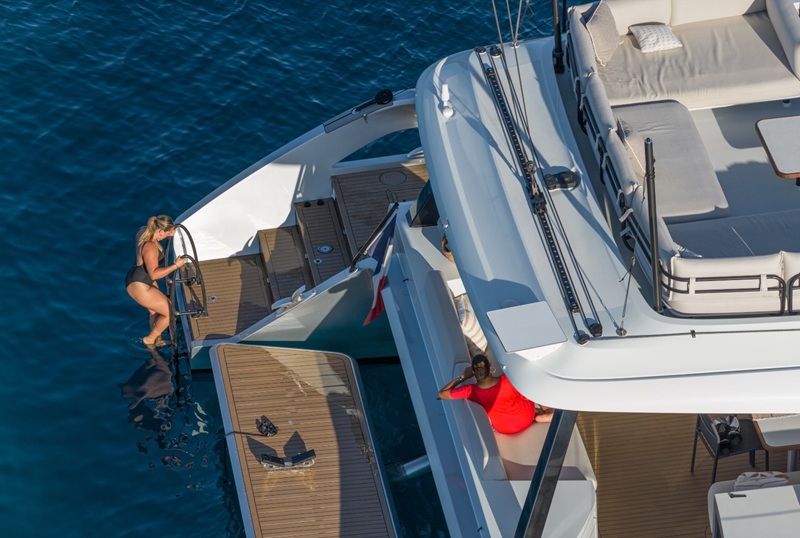
Choose your broker as carefully as you choose your yacht. The charter market is full of intermediaries, but not all of them market a yacht with the same rigor, maintain the same relationships with retail brokers worldwide, or genuinely understand what drives bookings for your specific type of vessel. With 25 years in this industry, we’ve seen owners lose an entire first season simply because their yacht was listed with an agency that didn’t have the network, the local knowledge, or the follow through to actually generate enquiries. A good broker will tell you honestly what your yacht can realistically earn, help you avoid the upgrade and marketing costs that don’t move the needle, and stay involved long after the listing agreement is signed. That relationship, more than almost anything else on this list, is what separates a disappointing first year from a solid one.
Be patient in year one. A charter yacht’s reputation like a restaurant’s or a hotel’s takes time to build. The bookings, reviews, and broker relationships that drive strong occupancy compound over seasons, not weeks.
Pick your yacht carefully. If you don’t already own the vessel, get a broker’s input before you buy, not after. Layout, guest capacity, toy inventory, and even color scheme all affect charter demand and some yachts that make wonderful private boats make mediocre charter assets.
Your charter base matters as much as the yacht. A yacht based where charter demand is strong Mediterranean or Caribbean hotspots will always outperform an identical yacht cruising less popular waters, no matter how good the marketing.
Don’t overlook the off-season. Shoulder-season charters are frequently underpriced by owners fixated on peak-summer rates, yet they can meaningfully lift annual occupancy with comparatively little extra crew or marketing effort.
Guest satisfaction is everything. It is far easier, and far cheaper, to bring a happy guest back for a repeat charter than it is to win a brand-new client from scratch. The best-performing charter yachts we work with lean heavily on repeat business by the third season.
Common mistakes we see many owners make when they list their yachts for the first time
Overpricing the charter rate. This is, by a wide margin, the most common first-time mistake. An owner anchored to what they spent on the yacht, rather than what the market will actually pay, prices themselves out of enquiries and a yacht with no bookings generates no reviews, no repeat clients, and no momentum.
Neglecting marketing, management, and brokers. Some owners treat the listing agreement as the finish line rather than the starting point, underestimating how much ongoing marketing, broker relationship management, and yacht presentation genuinely drives bookings.
Leaving the yacht static. Owners who keep their yacht in one location year-round, rather than following the charter calendar between regions and seasons, routinely see lower occupancy than those willing to reposition the yacht to where demand actually is.
Thinking about listing your yacht for charter, or choosing a yacht with charter income in mind? Get in touch we’re happy to run the numbers for your specific vessel before you commit to anything.
In conclusion
Listing a yacht for charter is rarely a straightforward, immediate win, but with the right expectations and the right partner, it’s one of the smartest ways to make yacht ownership work for you rather than against you. At Windward Yachts, this is what we’ve done for 25 years: guiding owners, first timers and seasoned yacht owners alike, through exactly this process, from choosing the right vessel to pricing it honestly, marketing it properly, and building the reputation that turns a modest first season into years of solid returns.
Our experience across the Mediterranean, the Caribbean, motor yachts, sailing yachts and catamarans means we’ve seen what genuinely works and what doesn’t, and we bring that professionalism and honesty to every owner we work with. If you have a project, whether you already own a yacht or are still deciding which one to buy, we’d be glad to talk it through with you. Trust our team to give you the real numbers and the right advice from day one. Email us now!